
Love, trust, and money: Building healthy financial relationships after divorce
When you find love later in life and after a divorce, you don’t just bring a favourite coffee order and a bunch of war stories. You bring history (even 'baggage'). Kids, pets, houses, super balances, businesses, ex-partners, and often a few scars from how money has gone wrong before.
In Australia, more than 120,800 marriages were registered in 2024, and about 47,200 divorces were granted that same year1.
Around three in four marriages are first marriages for both partners, which means roughly one in four involves at least one person marrying again2.
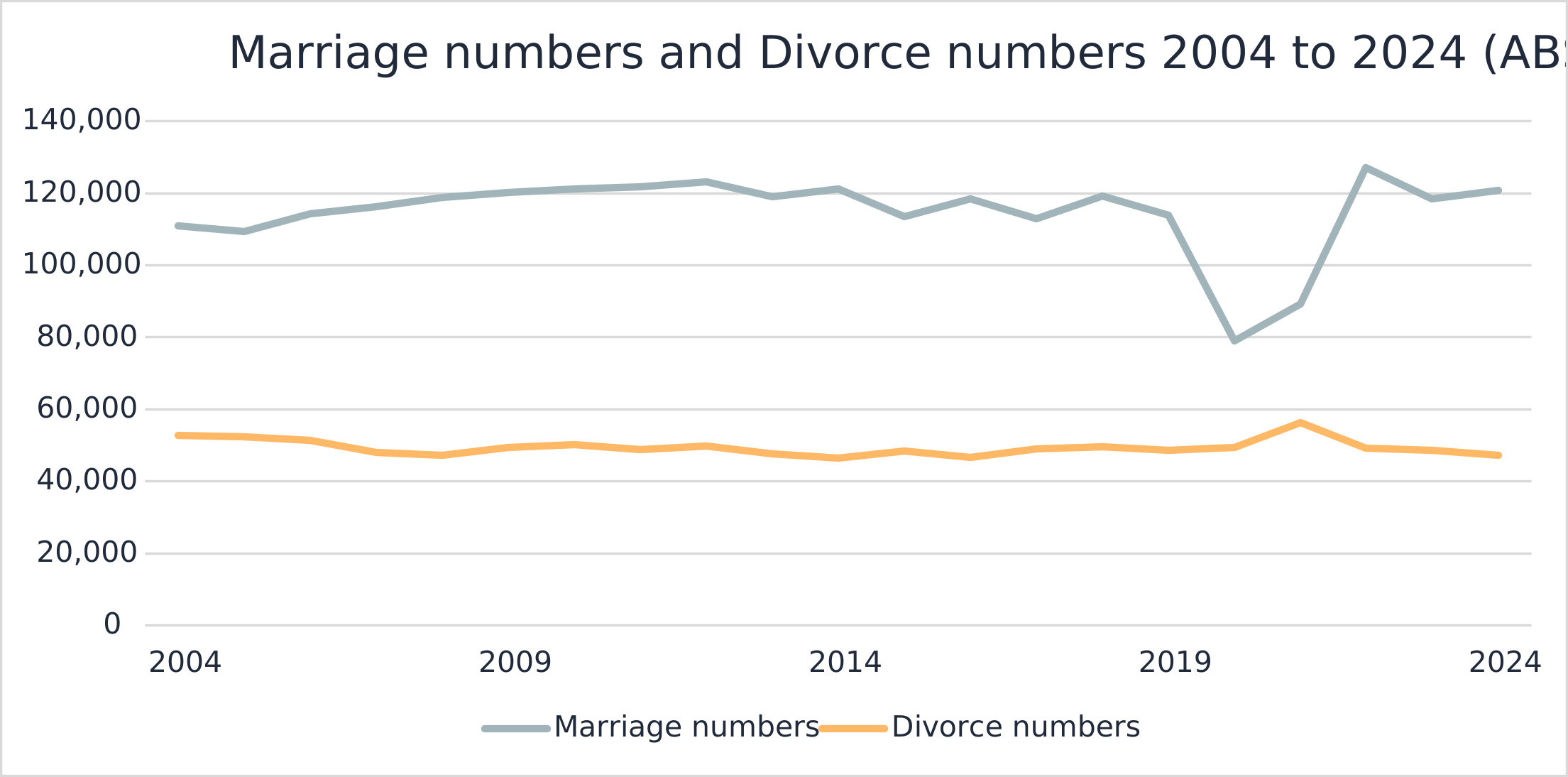
Since 2007, divorce rates have been consistently sitting between 38%-41% of the marriage rate (COVID excepted).
At the same time, money is one of the most common pressures on Australian relationships.
Relationships Australia’s Relationship Indicators Report (2024)3 found that the #1 pressure affecting relationships was cost of living (at 27%) and #5 was money problems (22%). That’s ahead of study and work committments, housework, childcare, and more.
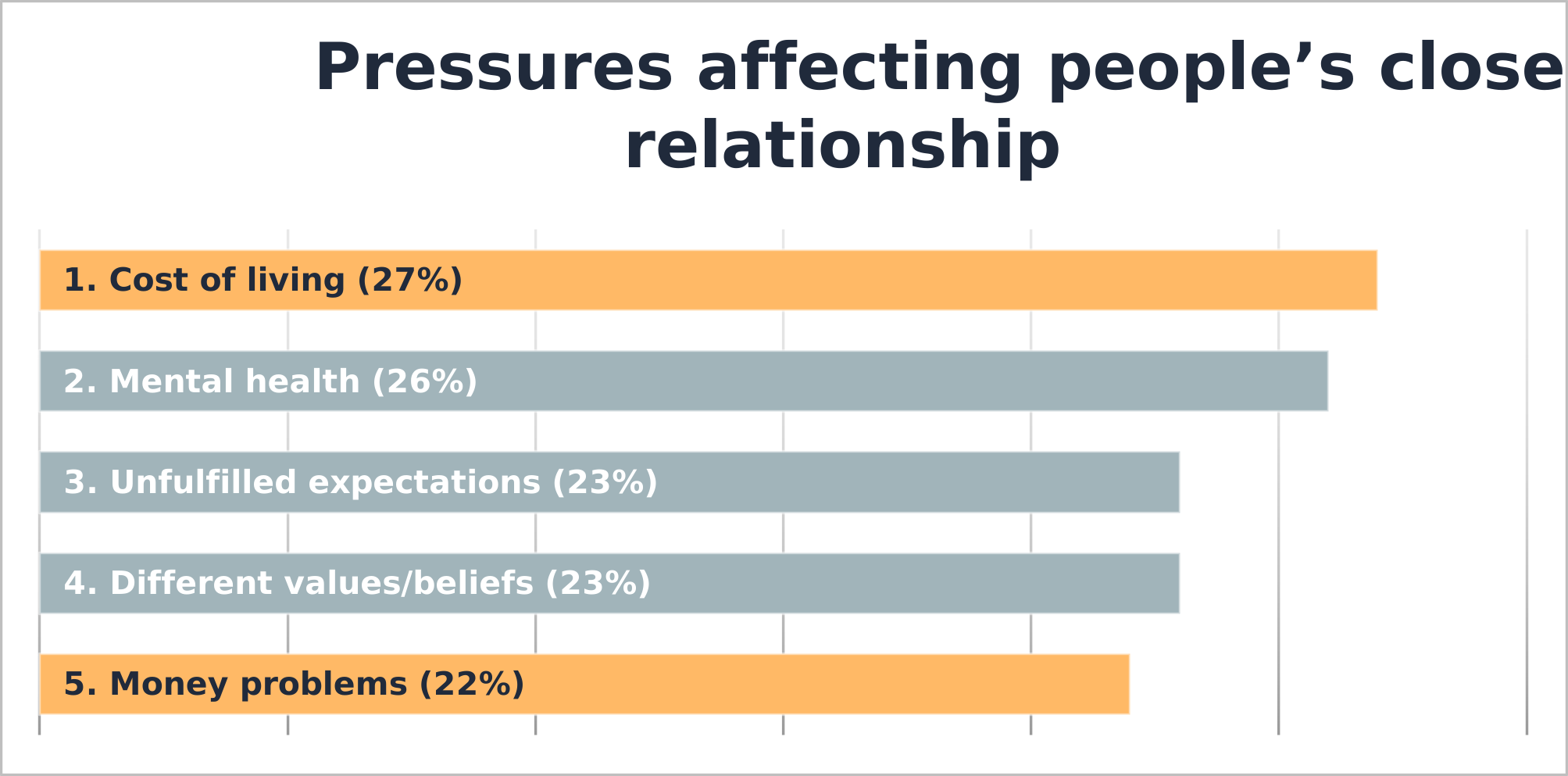
Cost of living and money pressures contribute as much or more relationship strain as other key sources.
Research commissioned by Westpac4 identified money-related issues cause arguments for 91% of couples, most notably frivolous purchases (62%) and financial challenges or concerns (56%).
This survey also had these items outperform other classic causes for difference such as social media/phone usage, political views, and very interestingly past relationships (a relatively mere 38%).
For a second marriage, the scope for money pressures and complexities is even greater.
So if you’re starting a new relationship in your 40s, 50s, or beyond, money isn’t a side issue. It’s part of the foundation, and a risk if you ignore it.
This article is about how to rebuild financial trust, have the right conversations, and structure your money so that this relationship has a better chance than the last one.
Why money feels bigger in second (or later) relationships
You’re not starting at the same point
By the time you meet later in life, you’re unlikely to be starting from the same line:
- One of you might have built up substantial super; the other stepped back from paid work to raise children.
- One might own a home outright; the other is renting or still paying off a mortgage.
- One might run a business; the other has a steady salary and a generous leave balance.
- Both of you may have children from previous relationships, and strong views about inheritances and “fairness”.
Different histories, different money stories
When couples come to see us after a separation, we often hear stories like:
- “I never even saw the bank accounts.”
- “The house was in their name, and accessing anything was a struggle.”
- “The business fell over, and suddenly we had no income.”
Even when things may be relatively equal financially, the history of one partner with their finances can be drastically different to another. If not addressed, negative patterns can repeat or unhealthy habits can form.
Three stages of building a shared financial life
It helps to think in timeframes: short-term, medium-term, and long-term. Different questions matter in each stage, but they all build on one another.
1. Short-term: Getting day‑to‑day money working
This is about getting by day to day, month to month: daily spending, debt, and immediate safety.
Key conversations here:
- How will we actually pay for life?
- Joint accounts, separate accounts, or a “yours / mine / ours” setup?
- What bills are joint? What stays individual?
- Income and debt transparency
- What do you each earn (roughly)?
- What debts exist – mortgages, personal loans, credit cards, ATO, HECS/HELP, old business loans?
- Are there overdue bills, payment plans, or a damaged credit file in the background?
- Attitudes to debt and spending
- Is it OK to carry a bit of credit card debt, or is that a hard no?
- What counts as a “big purchase” that must be discussed?
- Immediate safety nets
- Do you each have some money you can access in an emergency?
- If one of you lost your income next month, what would happen?
Case study
Jan and Peter, both in their 50s, moved in together after divorces. Jan hated debt; Peter was comfortable using his card “as long as the minimum gets paid”. It wasn’t until they talked about a big overseas trip that Jan discovered Peter had a sizeable credit-card balance from his previous relationship, which was quietly growing.
They were both shocked – Jan felt blindsided, Peter felt ashamed. Working with a professional financial adviser, they agreed to:
- Keep a joint “household” account for bills and groceries;
- Each have a personal account for their own discretionary spending;
- Prioritise paying down Peter’s high-interest debt before the big trip.
The real win wasn’t the spreadsheet – it was that they could talk about money without blaming each other.
If you’re feeling blocked at this stage, starting with something small, such as setting up a shared emergency fund, can build confidence and trust.
2. Medium-term: Structuring ownership and responsibilities
Medium-term is the next phase. It’s less about where you are now, but impacts future decisions and what options you have available. This can include where you live, how assets are owned, and how you share responsibilities.
This is where things often get messy for later‑life and blended families.
Big questions for this stage
- Will we share everything, or keep some things separate?
Some couples pool everything. Others keep “pre‑relationship” assets separate, but share new things they build together. Many use a hybrid:- Ours: joint home and joint savings for shared goals.
- Yours / Mine: pre‑existing investments, inheritances, or businesses.
- How will income differences be handled?
If one partner earns significantly more, possible approaches include:- Contributing to shared costs proportionally to income;
- Equal dollar contributions, but balancing that with other contributions (for example, caring work);
- Building joint assets in both names, even if one partner brings more cash.
- Property and loans
- Whose name is on the title, and whose name is on the mortgage?
- Are you comfortable living in a home owned only by one of you? If so, what protections exist if the owner dies or you separate?
- Are there guarantees in place (i.e.: kids’ loans, ex‑partners, or business debts) that could come back later?
- Business interests
- Does either partner own or co‑own a business?
- What happens to income if the business owner is sick or dies – is there key person insurance or a succession plan?
- Would the non‑business partner suddenly be left with a stressed business and no cash?
- Children and other dependants
- School fees, adult children needing support, caring for elderly parents: Who is responsible for what? Are we on the same page for what is appropriate?
Case study
Sam and Lee, in their early 50s, had been together three years and were renting when they decided to buy a home together. On paper, they looked solid. They had good incomes, some savings, and no obvious bad debts.
Their mortgage was declined. An old business loan in Sam’s name had gone into default years earlier. Lee knew there had been “some business drama” but had never seen the actual numbers.
Beyond hurt feelings, the real issue was structural: if they’d talked earlier, they could have:
- Cleared or negotiated the old debt sooner;
- Made sure any new loan was in the name of the partner with the clean credit file;
- Protected Lee from being drawn into business liabilities.
With help, they restructured: The business debt was settled, the new home loan went in Lee’s name with a clear co‑ownership agreement, and Sam set up proper business insurances.
Medium-term planning is where a lot of tax, Centrelink and asset‑protection opportunities (or traps) live. Getting the structure right can make a huge difference over a lifetime together.
3. Long-term: protecting each other and your families
Long-term covers the next 10+ years: retirement, ageing, and what happens if one of you dies or becomes unwell.
Here the questions are bigger, but incredibly important, especially in second or blended families.
Key topics:
- Retirement timing and lifestyle
- When do each of you want to retire?
- Where do you want to live?
- What does a “good life” in retirement look like? What is a must have, and what is a nice to have?
- Superannuation and investments
- How much super do you each have, and how is it invested?
- Are you comfortable taking some investment risk to grow funds, or do you prefer preserving what you have?
- Do you have binding death benefit nominations in place and are they up to date?
- Estate planning and inheritances
- If one of you died tomorrow, where would the money go? To each other, to children from previous relationships, or both?
- Are there particular assets (like a family home or business) that “must” go to certain children?
- Do you each have a valid will, enduring power of attorney, and (where needed) testamentary trusts?
- Blended families
- How do you balance looking after your partner if you die, with looking after children from your previous relationship?
- Would a life interest (your partner can live in the house for life, then it passes to your children) make sense?
Why communication (and transparency) is non‑negotiable
Couples who frequently argue about money are significantly more likely to divorce than those who don’t.
Financial planning, what we do every day, is about getting ahead of those conversations, looking forward, setting (and agreeing) on goals, then planning to achieve them.
Often these aren’t so simply financial in nature.
Being able to say “I feel scared when I see debt” or “I grew up with nothing, so I like having a big buffer” is just as important as agreeing on the size of the buffer, and far more important than picking a bank account or superannuation fund.
If these conversations feel too charged to handle alone, that’s where third parties can help.
How different professionals can help
There’s a whole ecosystem of people who can sit between you and the money and make the conversations easier:
- Financial advisers – to help with structure, strategy and trade‑offs
- Mapping out how to move from “yours and mine” to “ours” (if you want to) and working through the pros and cons.
- Structuring ownership for tax effectiveness and asset protection.
- Making sure business risk is covered (for example, key person insurance and succession planning).
- Aligning super, investments, and insurance with your joint goals.
- Lawyers (family and estate planning)
- Wills, powers of attorney, and estate plans that balance partner protection with children’s inheritance.
- Binding Financial Agreements (the Aussie version of a prenup) where appropriate, particularly when one partner brings substantially more assets or there’s a business or large inheritance involved.
- Financial counsellors
- Free, confidential help if debts or hardship are already overwhelming you. These are available through services like the National Debt Helpline.
- Relationship counsellors
- To unpack the emotional side of money and help you talk about it differently.
In our work as advisers, we often act as a sort of “interpreter” between partners. This includes translating priorities, running the numbers, and showing how different structures will work in real life. The spreadsheets matter, but the real value is creating a neutral room where you can both say, “This is what I want” without it turning into a fight.
Bringing it all together
Building a healthy financial relationship later in life isn’t about:
- One person taking control, nor
- Blindly merging everything and hoping for the best.
It is about:
- Awareness – you both know what exists, what’s coming in and going out, and what you’re aiming for.
- Smart decisions – you decide, together, how much to share and how much to keep separate.
- Protection – for each other, your children, and your future selves.
- Ongoing conversation – not one terrifying “money chat”, but regular check‑ins as life changes.
The good news is that, handled well, these conversations don’t just protect you financially. They deepen trust. They turn money from something that once hurt you into something that supports both of you.
References
- Marriages and Divorces, Australia via the Australian Bureau of Statistics as at 7 January 2026
- Marriages in Australia, Facts and Figures 2024 via the Australian Institute of Family Studies
- Pg 18, Relationship Indicators Report 2024, prepared by the Social Research Centre and published by Relationships Australia.
- Money the top cause of arguments for Aussie couples via Westpac
This general advice has been prepared without taking into account your objectives, financial situation or needs. Therefore, you should consider the appropriateness of the advice in light of your own objectives, financial situation or needs, before acting on it. You should also obtain a Product Disclosure Statement (PDS) relating to the product and consider the PDS before making any decision about whether to acquire the product.