Three days in a room full of advisers: What actually happens
Three days at the national financial advice conference sharpened our focus on what matters most for clients: clearer explanations, stronger protection of your information and better support through major life changes.
Once a year, I spend three days in a convention centre with a lot of other advisers, strong coffee, more than my fair cop of buzzwords, and far too many name badges.
It’s our big national financial advice conference. It’s run by the Financial Advice Association Australia (aka the FAAA), the peak body for financial advice, and we’re proud to be a member.
Ultimately, it’s the one time a year the profession gets together to ask, “What needs to change from here?”
If you’re curious what actually happens there, and what any of it has to do with your life, this is the view from my seat.


As a member of the FAAA Inspire Committee this year, I was proud to bring our own Bentley and to have supported many more from the next generation.
Inside the room (without the buzzwords)
Underneath the staging, it looks like this.
Mornings: Zooming out
Big sessions about:
- How people really make decisions when life is stressful or uncertain,
- How money rules are changing, and
- Where plans are going off track in the real world.
These are the “direction” conversations: are we, as a profession, focused on the right problems?
Daytime: Rolling up sleeves
Smaller workshops and panels where advisers, lawyers, researchers and other specialists share:
- Real case studies of things going right and wrong,
- Better ways to explain complex choices,
- How to support people through divorce, business exits, job changes, health events, and of course retirement,
- How to make advice clearer, safer, and more efficient at the same time.
In between: The honest bits
In the hallways and over quick coffees, advisers compare notes on:
- What they’ve changed in their practices,
- Where clients are still getting confused or frustrated,
- Which ideas looked good on paper but didn’t survive contact with real people.
That’s the raw material. The important part is what survives the trip home and changes how we work with you.
What stuck with me over three days
By the end, my head was full of ideas and patterns. A few themes kept coming up:
- People don’t need more pages. They need clearer explanations and more trust in how advice is put together.
- The danger zones in real life are still the same: rushed decisions, hidden risks, and assumptions that “it’ll probably be fine”.
- Keeping your information safe is no longer optional or “back office”. It’s front‑and‑centre work, for both advisers and clients.
- New tools are everywhere, but “shiny” is not the same as “useful”.
Everything I heard got run through a simple question:
“Would this make life better or safer for the people we actually look after?”
Only the things that passed that test made it onto the “let’s change this” list.
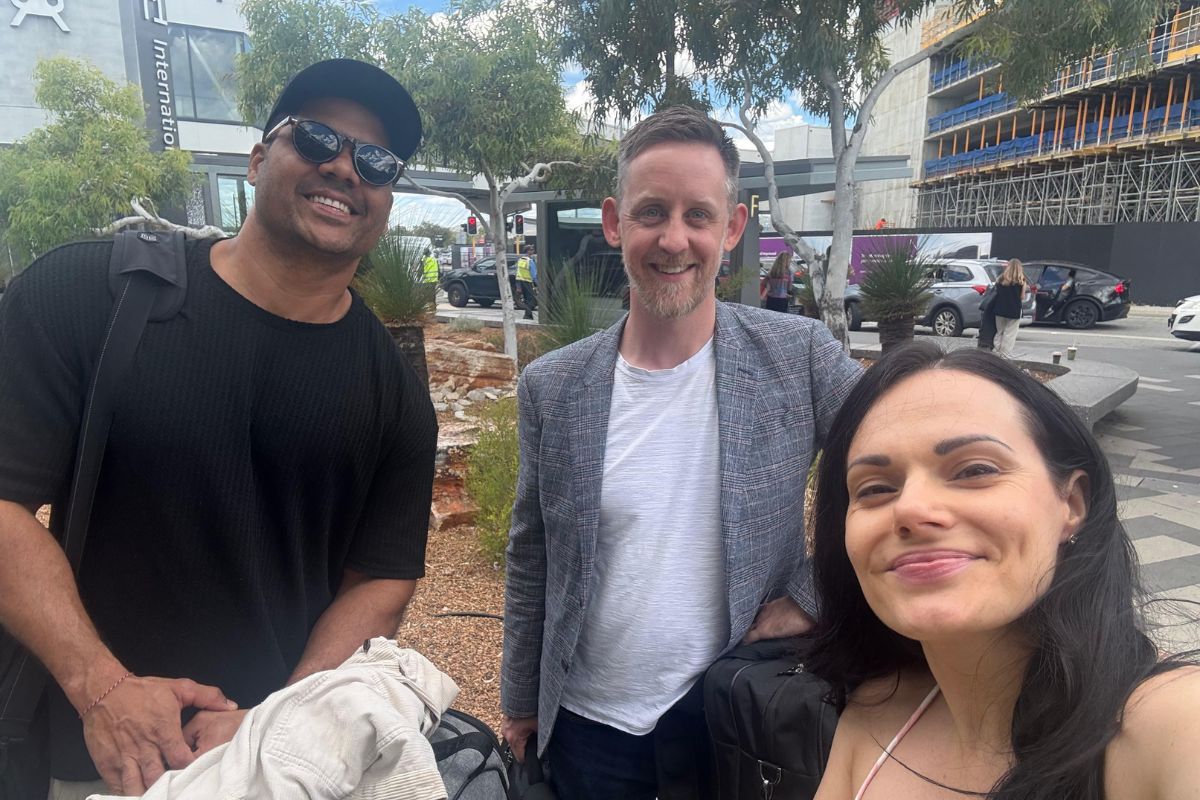
It’s often the impromptu meet ups in the wings, the hallways, coffee queues, and airports that are the most valuable: Comparing notes from peers, connecting with specialists, and learning from countless conversations.
What’s next
Here are some of the specific directions we’re leaning into after those three days.
1. More transparency about how we work for you
Trust is under pressure everywhere. The answer isn’t “just trust us more”, it’s “let us show you more clearly what we’re doing and why.”
That means:
- Considering how easy we make it for the next wave of clients looking to work with us, and how to earn and keep their trust.
- Reflecting on our wording on how we arrive at recommendations – what we’ve weighed up, what we’ve ruled out, and why.
- Helping keep visibility of where your money is at front and centre.
You should feel less like there’s a black box in the middle of the process, and more like you can see the moving parts.
2. Stronger protection of your information
A big focus at the conference was online security. Not in a “scare everyone” way – in a very practical, “people are trying to get access to your money, so let’s make that as hard as possible” way.
For us, that means:
- Moving even more of our document sharing into secure channels, not ordinary email where possible.
- Tightening our checks before we act on instructions that arrive by email or message.
- Giving you clearer guidance on safer ways to send and receive information, so you’re not unintentionally taking on risk at your end.
So if, from time to time, we ask you to use a secure link instead of attaching a document, or we double‑check something that feels “obvious”, that’s why. It’s a bit more effort now, to avoid much bigger problems later. Unfortunately, this requires constant and increasing vigilance.
3. Better structure around big life changes
Many of the stories and sessions focused on what happens when people are making money decisions in the middle of major life shifts.
That matters to us because a lot of our clients are:
- Ending or starting relationships,
- Selling or winding down a business,
- Changing careers or stepping back from work,
- Dealing with health changes or planning for retirement.
Off the back of that, we’re continuing to reflect on how we have our conversations with clients and how we can continuously improve.
4. Smoother, less fiddly process
Some of the best ideas were small, practical ones:
- Removing duplicate questions,
- Simplifying how we collect and confirm information,
- Making it easier to track where things are up to.
We’re adopting the parts that reduce wasted effort, giving you increased choices on how you provide us information along the way.
What’s not changing (on purpose)
Just as important is what we left behind.
- We are not chasing every new product or trend. If something adds moving parts without clearly improving your position, it doesn’t make the cut.
- We are not replacing conversations with scripts or tick‑boxes. Tools can help, but big decisions still deserve real, human discussion.
- We are not trading thoroughness for speed. If anything, hearing where rushed work has hurt people made me more committed to taking the right amount of time.
If a change doesn’t make things clearer, safer or more aligned with your life, it doesn’t get a seat at your table.
Why any of this matters for you
You don’t need to keep up with everything happening in the advice world. That’s my job.
But it does matter that, at least once a year, I step out of the day‑to‑day and ask:
- Are there better ways to explain what’s going on with your money?
- Are there new risks we should be protecting you from – especially online?
- Are we still supporting people well through the big, messy turning points in life?
That’s what those three days were for.
If you’re curious about any of it – or wondering whether what I heard might affect your plan, your next big decision, or how you share information with us: That’s great! Bring it up next time we talk.
Pulling the curtain back is part of the job.
This general advice has been prepared without taking into account your objectives, financial situation or needs. Therefore, you should consider the appropriateness of the advice in light of your own objectives, financial situation or needs, before acting on it. You should also obtain a Product Disclosure Statement (PDS) relating to the product and consider the PDS before making any decision about whether to acquire the product.